
su·per·nat·u·ral —1: of or relating to an order of existence beyond the visible observable universe; 2: departing from what is usual or normal especially so as to appear to transcend the laws of nature
The Bible is a supernatural book, not only because of how we got it, but because of the universe it frames. Reviving corpses, talking mules, death angels, fiery chariots, demonized swine, tongues and miracles and visions — this is the stuff Christians claim to believe in. However, I’m beginning to wonder if there isn’t a disconnect between the Bible we reverence and the world we actually inhabit.
Case in point: our choice of fiction.
In Perusing the Fiction Aisles, my cyber-friend and now fellow Realms author Mike Dellosso recently lamented the disproportionate amount of Amish and Romance fiction in the Christian bookstores. Where was all the supernatural, paranormal, horror, sci-fi, and fantasy? Mike concludes with a question: “How do you compete with that? How does a horror/suspense writer get his title noticed among the forest of romance and Amish (and Amish romance)?”
Apart from the necessary considerations about markets and marketing that accompany the query, I think there’s one crucial thing we might be missing in this discussion. Could the preponderance of romance and Amish lit be indicative of a dangerous worldview shift amongst Christian readers?
Take for instance this comment, on Mike’s post, from Linda:
“My two cents worth: I love suspense more than romance. However, the suspense/thriller needs to stay Biblical with some romance thrown in. If suspense/thrillers turn paranormal, I’m out of here. And that’s where I see a fair share turning to. I want a suspense novel that teaches me some good spiritual truths, not just page turners. Cut the paranormal and get back to a Scriptural basis that speaks to the heart.” (emphasis mine)
Linda’s opinion is probably representative of a far bigger share of the Christian market than us writers of supernatural / paranormal fiction care to admit. Nevertheless, I can’t help but feel it’s indicative of something potentially disturbing. She prefers that “the suspense / thriller… stay Biblical” and writes, “If suspense/thrillers turn paranormal, I’m out of here.”
My question to Christian readers who are turned off by supernatural story elements is this: Do you apply that same preference to the Bible? Heck, the very first book of Scripture contains stories about a talking serpent, an angel with a flaming sword driving sinners from Paradise, an entire city being destroyed by fire and brimstone, plagues of frogs and rivers of blood, sparring magicians, a death angel who slaughters firstborns, and an ocean parted at one man’s word. And that’s just the first book of the Bible! Read on and there’s a story about a witch who conjures the ghost of a prophet, an apostle whose shadow heals the sick, and four apocalyptic horseman who are en route to planet earth. And that’s just scratching the surface. So how can a Christian claim to dislike supernatural / paranormal story elements when the Bible contains so many of those elements?
Which brings me back to my initial observation: Could the preponderance of romance and Amish lit be indicative of a dangerous worldview shift amongst Christian readers — a shift away from a biblical worldview to something sanitized, stripped of mystery, and utterly predictable?
A biblical worldview IS a “supernatural” worldview. And Christians are called to live there. We believe in angels and devils. We believe in signs and wonders. We believe in life after the grave. We speak to God and are spoken to by Him. We believe that one day Jesus Christ will return to earth and set everything right. In short, We believe in a universe that is anything but “natural.”
So why is “supernatural fiction” so under-represented in Christian bookstores?

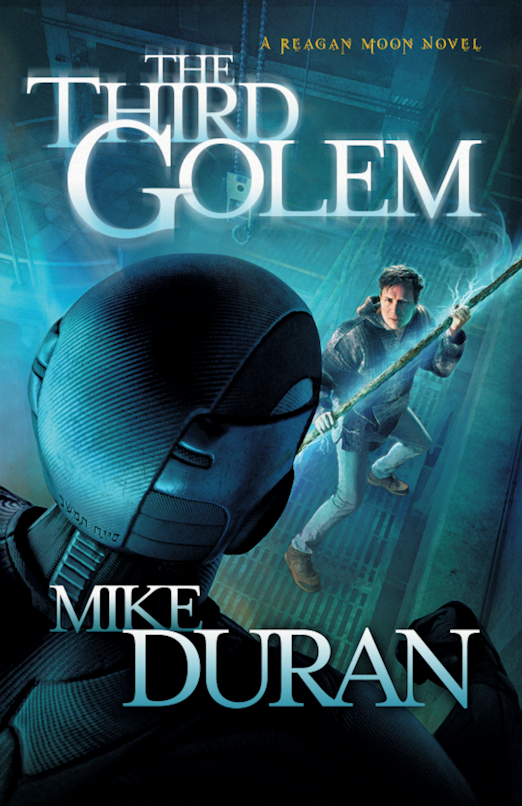
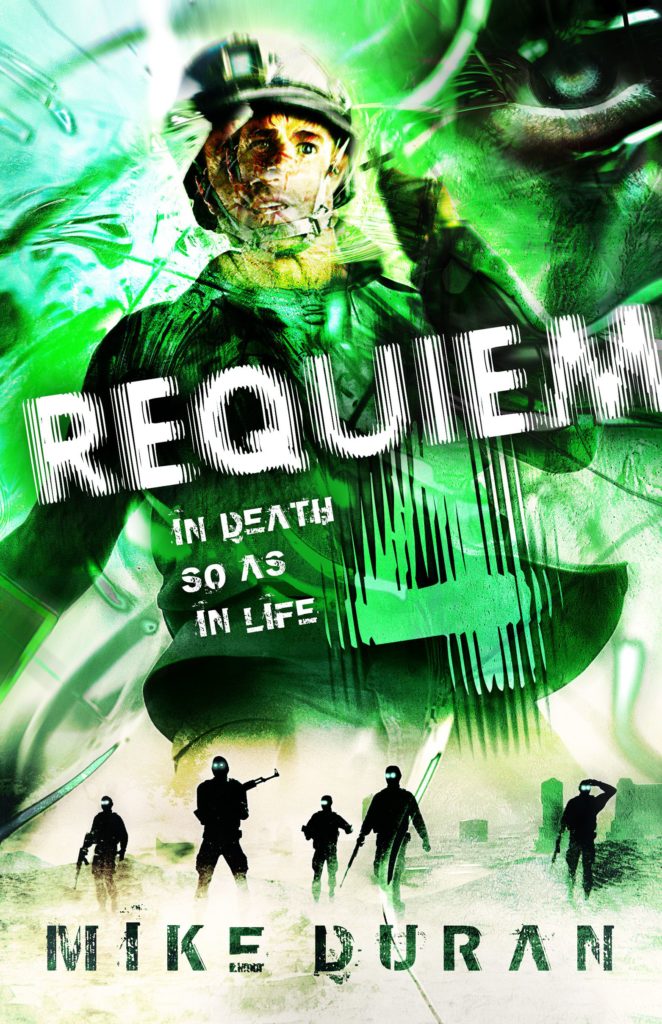
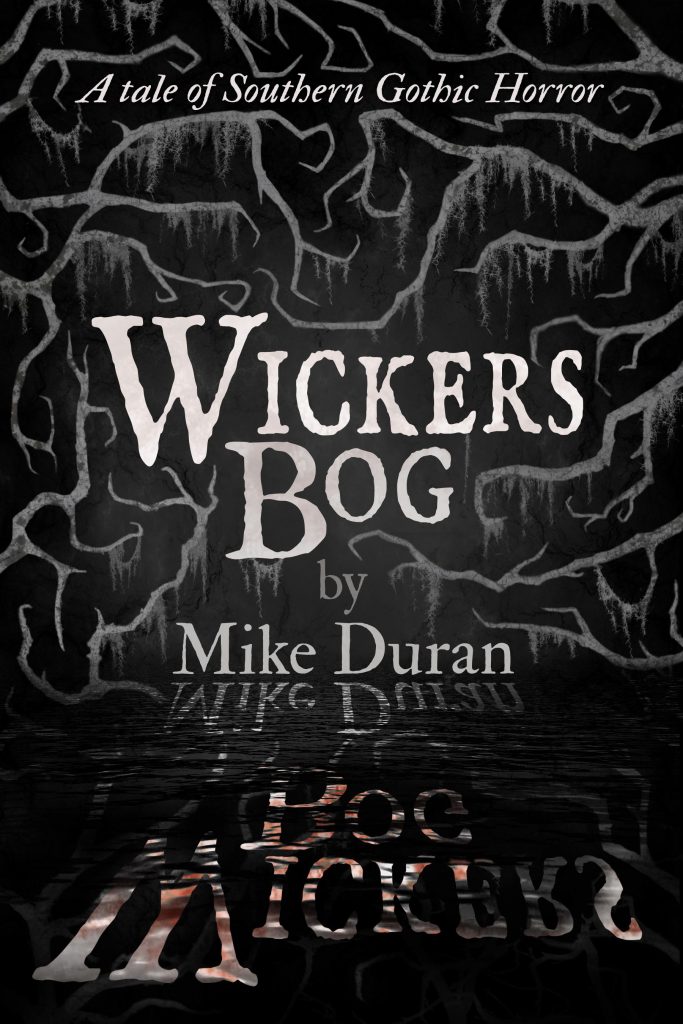
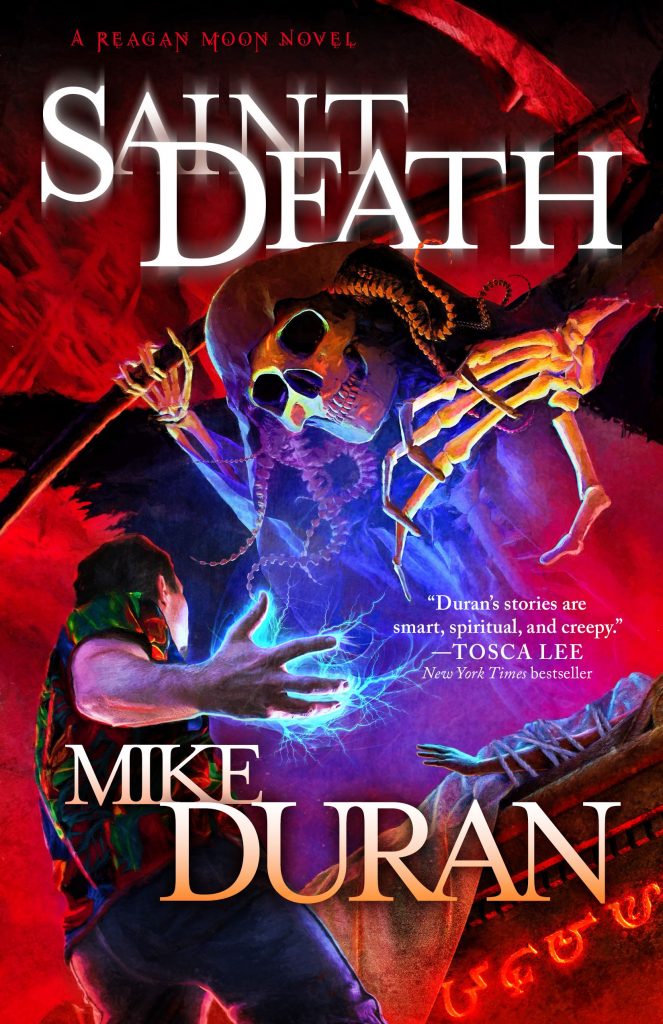
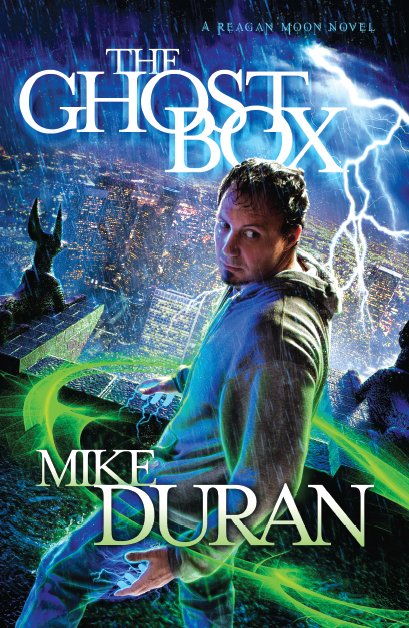
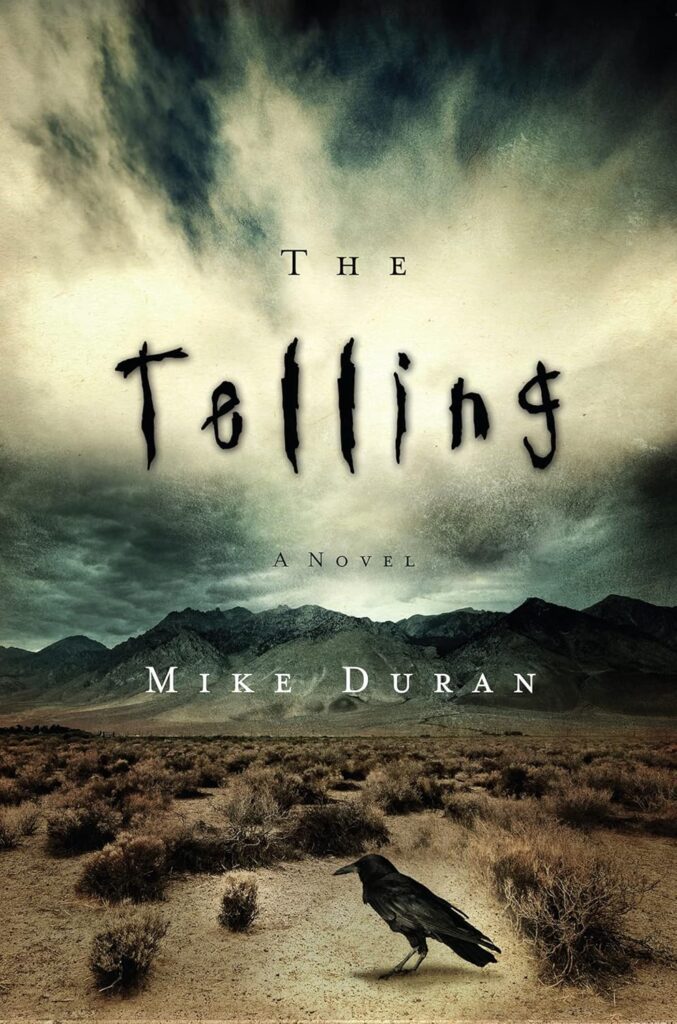
At least in part, I think supernatural fiction is under-represented in Christian bookstores because so many people associate it with the occult. We’re wary of opening ourselves up to evil influences, and rightly so, but does that mean we shouldn’t read the Gospels because of all those stories about demons?
I didn’t think so.
That’s a legitimate concern, Meg. I think it’s important to distinguish between a story that involves the occult and one that advocates the occult. One of my favorite examples is the Witch of Endor in I Samuel 28:7-20, wherein a necromancer summons the spirit of the dead prophet Samuel. While this biblical account definitely involves a creepy occult element, it does not endorse it. Most of the Christian supernatural fiction I’ve read takes the same tact. I’d hate to demonize (pun intended) supernatural suspense just because it contains a “Witch of Endor” moment. thanks for your comments!
Exactly. You see the difference between portraying the occult and endorsing it. Some people don’t.
Hey Mike, great post. Just great. Very thought-provoking. So much so that it inspired me to jot down some thoughts in my own post on my blog.
I think you really nailed it when you brought out how supernatural and paranormal so many of the Bible stories we read over and over again are. We love them, tell our kids about them, and point to them as inspiration teaching us that anything really is possible. So why the disconnect when it comes to fiction? This is something that no doubt will have to be explored further.
Oh dear. You really didn’t want to ask this, because the answer is simple:
Girls.
Boys like the fire and talking animals, the giants and murder and battles and blood and sacrifice. We get it.
But there is a reason that for every Lion of War series (which I can’t even find at the local Christian store) there are approximately 10.3 hundred jillion women’s series: and at least half (I’m being generous) are filled with what Relevant Magazine has referred to as “emotional pornography” masquerading as “sound (i.e. ‘safe’) scriptural basis.”
http://www.relevantmagazine.com/life/relationship/features/21488-emotional-pornography
The fact is this: the CBA is very comfortable with junk theology and risking emotional porn in its list, considering it (rightly so, in my opinion) to some degree a necessary “chaff” hopefully to be separated from the good wheat by its consumers.
Yet, Its not a coincidence that we talk about a gap in Christian spec over the past half century – that seemingly coincides with the rise of the CBA whose express original purpose was to create “safe” alternatives to the ABA (which included, apparently the unsafe works of Lewis, Tolkien and Lord Dunsany.
It is worth mentioning that as a kid growing up a zealous anti-Christian, the only reason I even picked up Narnia was because I knew a local youth pastor who had warned his kids away from it as a gateway to the occult.
What the CBA can afford to be restrictive on is the material that falls outside its target audience. In other words, men. If certainly not the sole consumers of scriptural supernaturalism in fiction, men make up the majority of its advance guard. And 90% of the purchases at CBA outlets are…women. This is not a controversial figure.
Thus, men don’t go to Christian stores, because there is little there that speaks to us. Even half the “men’s” non-fiction is stuff targeted for our wives to pick up to “improve” us, and a lot of that has been feminized. We’ll read a book if it makes us smarter or wiser, helps us build something, or advances something measurable…and is marketed that way. We may be interested in “being better fathers,” “walking with Jesus” or “improving our relationship with our wives” but only if that is a subset of a bigger goal, a greater adventure…more adrenaline.
I really don’t want to be misunderstood here: without the CBA, we wouldn’t have some critical, in some cases, life changing, works of fiction and non-fiction. There are great women’s fiction books and series, outstanding non-fiction, vibrant worship music and even, on rare occasions, a small opening for something of interest to men.
But it bears noting that the greatest selling biblical supernatural fiction series of the last thirty years was one I saw at the front of Barnes and Noble and Walden’s long before I ever noticed it, much later, in Christian stores: Left Behind. Spec fic, to succeed, must cross over to where the men are.
Terrific comments, XD! And thanks for the link. I dread turning this into a “Battle of the Sexes” type of deal, but I really do believe that the predominance of women consumers is shaping the CBA in potentially dangerous ways. How we can make that point without being inflammatory or appearing chauvinistic is another story. Blessings, my friend!
As a newcomer to the site, I’m a little hesitant to jump in here. But let me just question accepted wisdom here–thinking out loud, really.
Is speculative fiction de facto masculine? I don’t think so.
I’m working my way through Ursula LeGuin’s Earthsea quartet, and I have to say that she has written one of the most important speculative epics since LOTR–from a decided feminine perspective, if I can use that term. Also, the groundbreaking work of Anne McCaffery springs to mind. Madeline L’Engle created her own sub-genre of speculative fiction–from a blatantly Christian standpoint. Then there’s Joanne Rowling (’nuff said).
At another end of the spectrum, you have Stephanie Meyer and Charlene Harris–essentially (as I understand it) paranormal chick lit that blokey old me ain’t interested in reading.
My point is, some of the best and some of the most popular speculative fiction of the past forty years has come from female, even feminist, authors. It’s less that we need to write ‘manly’ fiction as, I think, we need to shatter our marketing chauvinism and actually write/publish quality literature that will speak to readers of both genders. The way all literature can, and should.
I completely agree with you, XD, when you say that CBA marketers are targeting a sort of ‘safe’ chick lit. And that it’s predominately consumers of that buy CBA books. But I disagree that it’s based on gender, and what women want to read. Gender is not the problem. Gender stereotyping in the marketing and editorial departments is the problem.
Kudos to Crossway, btw, for being willing to risk on a virile futuristic trilogy from an as yet unknown author (not me!).
(Oooh, that’s italic. Forgot my backslash…sorry about that!)
Thanks for commenting, Mr. Pond. I’m not (nor do I think anyone else in this discussion is) asserting that speculative fiction is essentially “masculine.” I know plenty of women who read and write speculative fiction. The question here is, Why is speculative fiction so under-represented in the CBA? In that, I agree with you that “Gender stereotyping in the marketing and editorial departments” is part of the problem.
Thanks, Mike. I suppose the question (in this sub-thread, any rate!) to, what can we do to dismantle gender stereotyping in CBA? I admit I don’t have an obvious solution. Even out of the Christian speculative writers out there–at least the ones getting pushed in the bookstores–very few of that very few strike me as quality speculative.
I think it will take risk–agents and editors being willing to risk something unusual, readership being willing to risk something different. But I really don’t know.
This is just the conversation I’ve been looking for! I was just joking earlier about how I despise Amish Romance novels, without having read any, simply because of how they clog the fiction shelves at Christian bookstores.
I want to find quality speculative fiction not written for YA, but I can’t find any. I’d like to read authors in this field to answer some of my own questions about writing Christian SF/Fantasy, so where are they? I’m going to check out the authors posting here to see what you’ve got, because this void needs to be filled, and we may be the ones to do it!
Ted Dekker’s Circle Trilogy was probably the only one I’ve read, but then his chronicles were YA. Thanks for the link to The Sword, John, that looks like a good one. I’m also looking for Christian Speculative works that are not written in our world. Any suggestions?
I found this comment very offensive. I’m a girl, and I hate romance. I hate the cutesy little Amish stories that mean absolutely nothing to me. I live in a world where we have to fight every day to get closer to God, where there are evil things inside of each of us trying to keep us from following him, and where God had to turn into a person and die in order to get me to him. My every day is a battle, so why on earth would I want to read a story about a cute little girl in a dress who never has to fight for anything? I want to read about someone battling and overcoming, facing tough decisions, and kicking a whole lot of ass on the way. (Yes, ass–it’s a word that’s used in the KJV Bible =P )
There is a reason that a lot of young women feel isolated by the current Christian culture. Because people, like you, believe that we actually want what the Christian book stores are selling. No, women over 50 want what the Christian book stores are selling. The skater girls, the gamer girls, the sports girls, the women who are going to have careers instead of becoming stay at home moms, or the stay at home future moms who have hardcore attitudes–we’re all left out. Which is why radical feminism is starting to become attractive to us. When Christians stop following the Bible and understanding that the Proverbs 31 woman is called to be STRONG, that a woman is a SOLDIER just as much as a man is (Ephesians)–when we start making women WEAK–that’s when women stop and say, “there’s something wrong with this.”
Don’t make the mistake of thinking that “women” want the sissy bull they’re being sold. There is a certain generation of women that enjoys that, and I don’t begrudge them their happiness. But the rising generation of young women that want to defeat evil in the world instead of sitting by while the men do it–the same generation that created Rock for Life, listens to Demon-Hunter, Skillet, Superchick, and Barlowgirl–is just as tired of “chick-lit” as you are.
This comment also comes off as kind of harsh, I know = P I just get quite frustrated with being marginalized by mainstream conservative Christianity, and I see women warriors going un-fed by this “sit nice in your chair and start sewing” attitude, so when you blame the Amish lit on “girls” you’re putting me in the same category as my sworn enemies. Not something I appreciate.
I absolutely agree with you. Check out my new novel The Omega Journey Blood Moons Whisper. You may enjoy a real dose of spiritual warfare wrapped in human stories. The kindle and nook are available for purchase. The paperback and hardback will be released in three weeks. God Bless
Mike, you make me want to head back to Speculative Faith (from which I went AWOL not long ago, partly because I got married and busier) and write about the reasons all over again.
Some of the reasons may be wrong views about where sin comes from. As Meg noted above, too many Christians often assume in practice if not in belief that evil influences come primarily from outside ourselves, not inside our own hearts (and here we thought it was those darned Secular Humanists who blamed The Environment for man’s mistakes). But this is contrary to Jesus’ words on sin’s origins — in Mark 7, for example, He said it was useless to try barricading one’s self against sin from outside, from food or some other source, because it comes from the heart.
Mike: “Could the preponderance of romance and Amish lit be indicative of a dangerous worldview shift amongst Christian readers — a shift away from a biblical worldview to something sanitized, stripped of mystery, and utterly predictable? ”
Stripped of not only mystery, but the reason why God does anything: for His own glory, to make the story greater and Himself greater.
I think you’re absolutely onto something. The dominance of small-scale stories is a result not just of simple reading preferences, but the dominance of small-scale views of God that do not match the Bible.
I am not saying these people are not Christians, or are “lesser” than Christians who like bigger stories. But I do dare to say that such folks could stand to read all of the Bible with the right view of God as a means to Himself, not God as a means to His gifts.
In the opposite conception, God did not inspire the Word, nor act to save people in order to further His own glory and tell a story to the universe of His own mightiness and steadfast, infinite love — instead, He works as a means to (greater?) ends: our own comfort, romance, safety in communities. This may not be idolatry — but it’s close. And worse than cheapening Christian fiction, it cheapens the Bible and the Gospel story.
More from a column last year (I’m not sure if I’m able to link to it here):
———————————————————————-
I’m not sure what’s so surprising about these kinds of stories attracting evangelical women. (I may get in trouble here.) From what I’ve seen of evangelicaldom, these are the very virtues prized even among women who don’t care for Amish stories. What is surprising about that, I wonder? Perhaps [we could assume] that a more-epic faith — involving a Bible filled with battles, lineages, miracles, special effects, and above all an omnipotent, don’t-mess-with-Him God who loves and yet is holy and wrathful — would naturally lead to more-epic stories, with similar elements, not just Safety-First stories?
I don’t want to knock all the Amish fiction. But the fact that they appeal so much to evangelical women scares me more than vampires. An overemphasis on this is not healthful to Christians.
This is what I mean:
– The stories are steeped in environments, even “mythology,” that are Traditional. That’s a comforting thought. This has been around for a while. Even the stories with newer elements contain familiar elements. You don’t have to fight much to accept it.
– In such stories, the environment is highly structured. You can let yourself go, even let the men handle things. If you were a woman in this story, you need only go with the flow, maybe only worry about raising your children. Yes, there may be problems, but (dare I say it) even those are “safe” in a way, because they are predictable.
– Such stories often contain “bad boys,” either religious or otherwise. Bad boys, to many women, are attractive. They have a strength that real-life “nice guys” often don’t have. They may be bad, but at least they’re powerful. There’s a strange comfort in that — a “comfort” that, unfortunately, leads to so many twisted relationships and enabling of evil abuses by men against women. It’s something I did. At least he’s strong. Maybe he’ll change. There’s a control in being controlled.
Well, isn’t that interesting. All three of those sets of characteristics apply equally to the appeal of legalistic environments and the hunting habits of vampires.
(Now I may really get in trouble.) When it comes to the Amish, I have a different view than many Christians do. Yes, these are just stories about the Amish, and perhaps some of them deal more even-handedly with the good and bad aspects of the lifestyle they practice.
But I know of many people who take the desire for safety, “simple life” and “traditional faith” way too far. They don’t just read stories about the Amish and pine away (which I maintain is itself questionable, when compared with reality and Christ’s commands for His church to engage the unbelieving world for His sake). Instead they want to be almost-Amish. They dress like them. They have the same cloistered views. Some want to live like them. All of the “safety,” and often even less accountability in a Christian community. They want their men to be large and in charge, a dangerous desire for control in being controlled as I said above. In essence, they earnestly desire the conditions that will lead not only to spiritual abuse (sometimes even physical abuse), but to a form of idolatry that puts people, tradition, safety and cloistered living above desires to glorify God and make Him, His Word and His grace the center of our lives.
[… For Christians,] Amish fiction seems at least original. But [. . . we also] had [fantasy] first. J.R.R. Tolkien and C.S. Lewis were not copying modern trends, they made modern trends. And both did it (albeit in slightly different ways) while glorifying God and echoing His truths.
If more Christian fiction continued to follow in fantasy’s path — and moreover, more Christians grew into epic-level faith that didn’t overvalue safety and “tradition,” but an epic God and His glory — we could legitimately claim that genre as our own. Question: how can we help this?
———————————————————————-
My answer after that lengthy (and mostly e-cycled) commentary: stop seeing God as small-scale, and don’t try to see Him as bigger apart from His own revelation about what He is like and has done. Instead Christians should delve into the depths of Scripture, wrestle with hard truths, supernatural accounts that are real and living and based in reality. Christ-centered sermons can help with this, pointing away from God-as-means-to-you and to God Himself. Even “dry” theology books can help with this.
God is epic. His Word is epic. And Christians should be epic — not just for The Journey or The Mystery, but His glory.
<> Yes! Thank you for putting it so clearly.
Quoting you: “Instead they want to be almost-Amish. They dress like them. They have the same cloistered views. Some want to live like them. All of the “safety,” and often even less accountability in a Christian community. They want their men to be large and in charge, a dangerous desire for control in being controlled as I said above. In essence, they earnestly desire the conditions that will lead not only to spiritual abuse (sometimes even physical abuse), but to a form of idolatry that puts people, tradition, safety and cloistered living above desires to glorify God and make Him, His Word and His grace the center of our lives.”
Yep, and so I wrote a novel about people who try to live a simple, cloistered, “safe” life. Except it’s not safe. It’s suffocation. But don’t get me started on hyperpatriarchy or I’ll derail our train of thought here. I was just so pleased with your whole comment, Stephen.
Thanks for your encouragement, Meg. My own work-in-progress includes a very default-evangelical (of yesteryear, mostly) small church in a Missouri town, which is wracked by scandal … before one of its senior deacons, who is having family problems of his own, begins journeying in his sleep to a certain Other World.
Sometime I’d enjoy hearing about your work-in-progress; I’m fairly accessible at my own site (which is currently very nonfiction focused), and I’m heading over now to have a look at your blog. Biblical balance between Legalism and Libertinism (i.e. no discernment or spiritual guidelines at all) is a heavy theme, and for too long one extreme or the other has been portrayed in Christian fiction without much Christ-centeredness. However, I keep having to remind myself that the solution is not only to try to Fix the Problem but to point to the solution — Christ, the Cross, the Gospel and all its implications for every area of life, including creativity and stories.
I will check out your blog, Stephen. Your WIP sounds interesting. I like novels that dig into the big questions of faith and practice instead of just adding a sprinkling of Christianese to any old plot.
My WIP (still untitled) is coming out from WaterBrook Multnomah next May. It’s about an isolated home-schooling widow who’s trying to escape a cultic church. And it happens to have a little dash of the supernatural. 🙂
It’s very likely you just sold one of your first copies — not only to me, but my own mother-in-law who just happens to be a widow who’s been quite familiar with some cultlike phenomena!
Apparently you don’t need critique help with that project, then! Congratulations, and I look forward to seeing it in stores.
Thanks, Stephen. May 17, 2011, is the release date.
Sorry for the thread highjack, Mike! I’ll be good now.
In publishing it’s still about money. Since the hot books are about Amish life, roll out the multiples in Amish stories. When asked what was selling for a particular publishing house, an editor replied, “It’s still Amish fiction for us.” He sounded weary of it, too.
Why? From my female standpoint and from my passionate Christian standpoint, I have no idea. It’s got be beyond curiosity at this stage. And, yeah, I agree with the men here that SOME females yearn for the simplicity of that life, that structure, whatever. I contend that sin is just as rampant in those legalistic communities as it is in the liberal emergent churches and everything in between. Because human beings live there.
I detest the “paranormal” but love the supernatural. Don’t read fantasy at all. Don’t like it. But that’s just me. I say publish the books for all readers. Let’s face it, the majority of Amish novel readers will not gravitate to Zombie novels. Ain’t gonna happen. I love thrillers, a little horror with strong Biblical concepts (a la Mike Dellosso), and I want/expect the supernatural element. I will not ever read Amish novels. Not for me.
If theology is what we’re measuring here in Christian lit, forget it. Too much conflict. I question the theology of the Amish as much as I question the theology presented in The Shack. So theology can’t be the constructs of the disagreement, at least not logically.
For all you male connoisseurs of “what women want” ;), I guess I’m the exception to some of your musings. BUT I do write romance, raw and real, with guys being guys and women being women with all their flaws. But “emotional pornography”? No. Substance, I hope.
I don’t read much Christian supernatural novels, but I think there might be a reluctance to really sign/promote those kinds of authors because a good part of the church is caught up in eschatological fiction (Left Behind, et al). If it’s supernatural it HAS to be be connected to the endtimes — preferably the pre-mil version, please. Anything outside of that smacks of “Hey, that sort of thing isn’t in scripture, why are they writing about it?”
There’s an unspoken standard that says Christian supernatural authors need to stick very close to Biblical accounts of encounters with the supernatural and not “elaborate on the vagaries of the unseen world” read in scripture.
Related: the only Christian supernatural books that I’ve read is C.S. Lewis’ space trilogy, which was fantastic — but if someone tried to publish something like that today, it would be soundly rejected.
Let me be clear: the gender mix of spec-fic in the only market where spec fic is treated as a viable genre instead of a touchy, dangerous subset that doesn’t sell well is blended. This isn’t about what women want or don’t want: it is about what men won’t find in certain bookstores that are quite obviously not designed with their wallet in mind. And, as I’ve said before: that’s okay.
I can find what I like at the weird fiction section of B&N. They have a massive wall with cover facing books to lead me in, just so I don’t miss it, even! Religion-inspired (both Christian and other) books are clearly not excluded from these offerings (Twilight, Forever Richard, etc.) so I simply strongly recommend Christian spec-fic authors to find me in the normal channels, instead of the specialized “safe” zones. I won’t go (unless I’ve been made specially aware, which is an expensive general marketing prospect) into a Family Christian for adventure fiction any more than I would go to Bath & Body Works for cleaning supplies.
And Jay –
If you liked the Space Trilogy, try A Star Curiously Singing, by Kerry Nietz.
Thanks! I will check it out.
I certainly agree with Meg’s comment. Part of the problem is that as soon as you include anything supernatural, you open the door to critizism about leading people to the occult. (Really? Someone said that about Narnia? Please give me a break!) I mean, look at the hoopla around Harry Potter, which were clearly fantasy (and a darn good story about the fight between good and evil/love and hate).
I think another issue is that we don’t tend to focus on the supernatural today. I know I don’t. Yes, I believe the stories in the Bible. Yes, I believe that the end times will be pretty supernatural. But I don’t think about much of what is happening around us today is supernatural. I know on one level it is (God keeps the whole world in motion, after all), but I don’t think about Satan being that involved in our daily lives much.
Maybe I need to read Frank Peretti again.
Mark, your admission that “we don’t tend to focus on the supernatural today” is at the heart of my point. Whether it’s theological (as in dispensationalism, which sees miracles as part of a passing age) or cultural ( as in being seduced and cradled by a materialistic worldview), I believe your observation is accurate: Western civilization is secularized (i.e., supernaturally-neutered). What’s interesting in all this is that the Bible describes the end-times as a period of great deception, one in which “the very elect will be deceived” (Matt. 24:24). Could our drift away from a supernatural worldview be part of that? Something to think about…
Long time reader (finally) decloaking off your starboard bow.
Thank you, I thought I was the only one who noticed this.
As a Christian fiction writer (looking for beta readers for my first Christian supernatural novel), I would love to say I read extensively in my genre but that would be a lie. I’m a guy who loves sci-fi, action and fantasy (as long as there are no anthropomorphic talking animals, looking at you C.S. Lewis) but modern Christian fiction writers have nothing to say to me.
I don’t read romances and don’t care about life at the turn of the century, the Amish or theoretical “talks/meetings” with God that seem to be nothing more than spiritual navel gazing at best or serious rewriting of Biblical truths at worst. Even the so-called Christian thrillers [to me] are nothing more than regular thrillers with a few passing mentions that somebody is praying for someone and is devoid of foul language and sex. And the Left Behind series? Talk about pedantic story telling.
I regularly peruse the Christian fiction shelf but continually see books written by women, for women about some woman who is having a “crisis of faith” about whether to “fall in love” with the new mechanic in town. Who is this strange man? And why does it make her heart beat so strong in her chest? Can she let go of her past and learn to (trust God and) love again? Geez Louise. I cannot believe that’s the best the Sovereign God of the Universe has to offer!?! Change the time period (Victorian era England, the Amish, WWII, whatever), maybe throw in a fatherless child (wild past, widowhood) and a “mystery” needing to be solved and you’ve got the plot for 95% of contemporary Christian fiction.
Publishers are always complaining that men don’t read but this is the drek we are shoveled on a consistent basis. No wonder we don’t read Christian fiction, there’s nothing there for men (or anyone) who enjoys a good story told well that has “epic”-like qualities from a Biblical world view that have all of the other qualities you so aptly outlined in your post.
I’m still looking for that kind of a book/author and finding none, as “they” say, I wrote the kind of book I would like to read. Maybe once I start the rounds it will fall on deaf ears in the Christian agent/publishing world. I don’t know, I wrote the book I believe the Lord gave me the talent and desire to write. Everything else is in His hands.
(Sorry for ranting but I really enjoy your blog and you touched a nerve (in a good way) for me to be able to vent.)
Keep up the good work 😀
Thanks for commenting, A.J. I really appreciate your readership and for plugging along with your story despite the frustrations. Please drop me an email sometime and let me know how your writing journey is going.
A.J., c’mon. I think it’s absolutely perfect that you wrote the book you want to read. You should. But don’t, please, give this blanket condemnation for Christian fiction when you state you rarely read much of it. Yes, you give reasons, but to include this smearing of some excellent authors which you assume don’t write well because of the smattering of fiction you’ve read within the ranks of Christian fiction is just plain unfair.
I don’t blame you for not reading CBA romance or any other genre you don’t prefer, but don’t insist that the majority of fiction is as poor as you described. Quite frankly, that’s just arrogant.
And, Mark, the supernatural is in full swing. Today. Now. It’s never been just a “future” occurrence. Look around. The evidence is clear. In art, in politics, in relationships, everywhere. The demonic overtones present themselves daily. Evil isn’t coincidence. Yeah, Frank Peretti captures it all well.
Jesus delivered people on an almost daily basis. Children and adults. Discernment is part and parcel of Christianity. Recognizing the source. The enemy. Supernatural communication, events, obedience, etc. Third world salvations often include demonic deliverance and take the spirit world for granted. Why don’t we?
Just so we’re clear here, I agree with you 100%. I was saying we don’t look at the supernatural in our American Christian culture today as a bad thing, not as something to be proud of, and lumping myself into the same group of people who need to be wacked upside the head.
I skipped past every comment before writing this, because I have to say, without seeing the other opinions expressed here, that I agree 100%, completely, and whole-heartedly with every word of your post. Well said. Well, well said! Awesome, Mike. I’m printing this one and putting it in my notebook to remind me when I sit to write just WHY I write what I do.
Thank you!
Finally! I have a little better understanding why I continue to get rejection after rejection from both agents and publishers! Despite glowing peer reviews in abundance and a finalist placement in the MLP Premise contest, I can’t get one single person in the “business” to even ask to read it! It is so frustrating for an author!
Thank you, thank you, thank you for writing this article, Mike. I’m printing it off so I can stow it away and read it whenever I need to.
Nicole, I’m sorry you took my comment as a blanket condemnation, it was meant as nothing more than my observation after honestly and earnestly (still) seeking Christian authors that “speak” to me and write the kinds of stories I’d be interested in reading. I never said the writing or authors were bad writers.
Mike was talking about the general Christian publishing industry and why there is a severe lack of other genre representation in Christian publishing.
Obviously the market proves romance and historical fiction is what people (particularly women readers) are interested in because they sell like gangbusters. I wish there’d be more alternatives for men, boys (I have an 8-year-old son) and people who aren’t interested in romance or historical fiction which is the vast majority of what is on the shelves.
I forced myself to read through one of the Narnia books, but talking animals don’t work for me, regardless of how well regarded the author or the series. I’ve read Dekker, Peretti and continue to search for more. I’ll be looking into Mike Dellosso’s books after visiting his blog as well as this Mike’s book upon publication.
But like Mike said, where is the supernatural/speculative Christian fiction? Why is it seeming to be all romances set in some rose colored glasses of yesteryear where the only thing at stake is does girl-get-boy?
I agree wholeheartedly with the entire post and some of the opinions expressed here. Spec fic is my second genre of choice when I’m writing. My first is military fiction (you really don’t find many women willing to tackle that genre in a non-romancy way!) .
I loved researching my demonology fiction. Researching and writing in that field will increase your faith in amazing ways. It is spiritual warfare, after all. I don’t think the CBA and (no offense) Amish romancers would really understand that.
On the upside of CBA turning a blind eye to spec fic and focusing only on Amish and “safe” fiction, this enables smaller, indy Christian publishers to have a chance at finding those markets. I hope I haven’t stepped on any toes, that wasn’t my intent. The article was wonderful!
A. J., thanks so much for clarifying your position. For your son, I’d suggest Robert Liparulo’s Dreamhouse Kings Series, some other novels by Bryan Polivka and Wayne Thomas Batson to name a few which are geared toward boys. Have you read Robert Liparulo, Steven James, John Robinson (although John’s novels might be out of print)? If you like thought provoking fiction, Tosca Lee’s Demon . . . a memoir is first class from concept to writing.
Hey, I admitted to writing romance, but even I only occasionally read in this genre anymore because of some of the reasons you gave. I’ve been trying to sell my self-labeled “non-traditonal” romance to CBA publishers with no takers.
I think the niche writers in CBA should have a place in the market, but there seem to be very few risk takers. That’s one reason I so admire Jeff Gerke’s Marcher Lord Press. He acted on the perceived need of getting speculative fiction into the CBA market place. He’s to be commended. I hope he prospers big time.
And, S.M. Kirkland, bring it on. Love military fiction. (Oliver North, Don Brown to name a couple of CBA contributors.)
The CBA gets spiritual warfare. You just have to know what authors to read.
Nicole,
My first novel “Higher Honor” is set at a military college, you can read about it at my website http://www.smkirkland.com. I’m working on the second in the series about a once hard core believer and Special Forces officer forced to face his own demons.
My spec-fic work is a short story entitled “Fair Balance” and a novel based on the same characters of a group of young demonologists facing both human and unseen demons. It’s more young adult.
I’d love for you to check out my site =)
Count on it!
Mike, if I understand your main point, you’re saying that reality is “This world’s not my home,” but the current trend of Amish fiction is belying that point. That’s a sobering thought.
Becky
Very apt, Becky — and as Randy Alcorn likes to say, “this world (as it is now, under the Curse) is not my home,” because after Christ’s return, Christians are destined to live as resurrected saints in a glorious resurrected and blended New Heavens and New Earth.
I think in some way the Amish fiction does remind readers of that world, what with all the safety and tranquility and traditional emphasis. Any fiction experience, even the mushy romance stuff, can evoke even nanoseconds what C.S. Lewis called sensing the “numinous,” the Other World.
But it’s imbalanced, and the complete picture of the Gospel (including the pending forever defeat of evil) is left unportrayed.
As merely another kind of fantasy, too, the glorification of the Amish leaves out the very real tendency of such groups (whether Amish or patriocentrist, or “emergent” or fundamentalist or whatever) to act as if they’re the only ones doing Christianity right, because they have a unique lifestyle of Christianity-And-Something-Else.
And people say it’s Middle-Earth, Narnia and other worlds that encourage “escapism.” As Tolkien said, the question is what a reader is escaping from, to where he escapes, and why he wants to escape. …
Amen, Mike! I’ve been believing/saying this for years and it’s great to have it expressed so eloquently.
Well said, Mike. I made some similar comments and points in an article at the back end of my published fantasy novella, which I titled “Why I Write Fantasy as a Christian,” since there seems to be that contingent out there who thinks Christians shouldn’t write such stuff. Then the article ran separately at Residential Alien Magazine:
http://residentialaliens.blogspot.com/2008/12/fantasy-and-christianity.html
Key point here that jives with your thoughts, engaging in fantasy prepares us for the supernatural when God does do it. We won’t dismiss it so easily. And I think its absence does promote a more secular mindset.
Another of my blog post that relate to this topic:
Magic and Sorcery, Are They Evil?
http://blog.rlcopple.com/?p=77
Excellent points. I was just re-reading Good Omens by Gaiman and Pratchett and thinking how unusual it was that one of the best-written supernatural End Times thrillers ever, with very provocative theological issues not to mention hysterical humor, wasn’t written by Christians at all! They’re beating us at our own game (not that I begrudge them)!
Of course J. R. R. Tolkien’s concept of “eucatastrophe,” which he says is at the heart of all true fantasy and myth, is conspicuously borrowed from the Gospel message.
Great post Mike!
I will read almost anything, but Amish romances are low on my list. I am currently marketing a Christian supernatural book, and I’ll tell you how I got it in front of an agent (still waiting on the agent, so no super success story yet): I called it women’s fiction. Was that dishonest? No, it wasn’t, because women’s fiction is a broad category. Mine happens to have a love-conquers-all theme, so I believe I was being honest and cagey at one and the same time.
By the way, I am exploring supernatural Christian fiction right now and attempting to put up links on my website. Some of these comments gave me ideas for authors to check out, but if any of you have other ideas, please advise. Currently, I have linked to your site–Mike Duran–because I love this blog (though, obviously, haven’t read any of your books yet), Mike Dellosso, and T L Hines. Personally, I am no fan of Frank Peretti and have only read some of his books due to having lived in Ashland, OR–which truly is a place rife with spiritual warfare. I’ve heard that his writing has improved over the years, however. Is that true?
Anyway, this is a great discussion on Christian literature. My husband and I had a similar discussion the other day. He thinks the term ‘supernatural’ might be off-putting to Christians, who will wonder what the author means by it. He wondered if sticking to ‘speculative’ might be better. ‘Speculative’ is much broader, though, isn’t it? What do you think?
Speculative is the more popular term for it. The rebel in me likes Supernatural =)
As for Peretti, I like his stuff, but I’m more willing to forgive imperfect writing if the characters capture me.
I’m really glad to have found this blog, btw. There are many spec fic writers on facebook and shoutlife (although I’m not on sl anymore).
I’m so late into this that I really don’t have much that hasn’t been said. One, great post. Two, per the comments: Hey now. I’m a twenty-something woman, and I wouldn’t touch a romance/Amish/whatever with a ten-foot pole. I actually hate the stuff–for multiple reasons. I know many women who feel the same way. So it’s not strictly a ‘girl thing.’
Dunno. Just felt it had to be said. 😛
You’re right on the money about the occult. Christian readers equate reading about spiritual warfare with demons as dabbling in the occult. I’m sorry but we do have an enemy and that enemy is Satan and his fallen angels and until we openly acknowledge that and tell the world evil is REAL, we will continue to play right into his hands by sticking our heads in the sand!
Books about spiritual warfare are, in my opinion, necessary to make us wary of the enemy’s tools and his influence. Apathy and disregard for the “occult” are Satan’s biggest allies. This does not mean we should go out and attend seances or summon demons. Walter Martin’s excellent book, “The Kingdom of the Occult” should be required reading for all thinking Christians.
It took me ten years to get a major publisher to take a look at my supernatural thriller book series. My goal was to present the concept that evil is real and Satan and his forces are out there actively destroying lives right and left and we need to sit up and take notice.
Initially, I aimed the books at a crossover market and the CBA publishers just didn’t get it. I had to self publish the first two books of my series and garner some book awards before my agent could get a major publisher to look at them. Kudos to Jeff Jernigan at Hidden Value Group for getting me a deal with Strang for a five book series. Now, I’m a little hesitant about how these books will be received by the Christian readers out there. I had good success with the secular marketplace, believe it or not. But, most of the supernatural thrillers center around serial killers. I get tired of reading about serial killers.
I am in hopes that one of the books in the series will help me launch a science fiction series. We’ll see how successful they are when my books hit the market. But, it is daunting.
In my marketing and publicity campaign for the self published books I found myself speaking to talk shows in the weird and bizarre world on the fringe. But, I viewed it as a missionary field and had a great time talking to people about the validity of the Christian worldview. I am also excited that io9 brought this story to the forefront. Let’s continue to engage them in our worldview. Thanks for the post. It was refreshing and has opened up a very important topic for discussion. Readers, get out of the safe zone! The world is a hotbed of spiritual warfare and the stories are too good not to be told — and read!
Bruce, thanks for sharing your comments, and in reacting to my thoughts on evangelical fears of supernatural fiction due to concerns over “the occult.” I disagree with your prescription for this malady, however. It is one thing to address spiritual warfare in balanced fashion, but to misunderstand, misrepresent, and poorly engage Western esotericism is another thing entirely. As is the equation of various forms of supernatural fiction with the “occult.” And as to resources to address this, “The Kingdom of the Occult” by Van Gorden and Jill Martin Rische is not a reliable source. As a scholar of new religions I can attest to the problematic nature of this volume. Look for a review on it at Sacred Tribes Journal (www.sacredtribesjournal.org) by Douglas Cowan in the near future.
You need to see this new indie author: R. Leo Olson. His novel Sojourning With Angels: The Rise of Zazriel is about the afterlife and is in my opinion edgy. This is about unseen warfare in a marriage. http://rleoolson.com/wordpress/ Check out the trailer…
Thanks for weighing in on this important topic. You and your readers might enjoy my thoughts on this topic at my blog TheoFantastique in regards to sci-fi:
http://www.theofantastique.com/2010/06/29/i09-why-wont-christian-publishers-take-on-science-fiction/
and horror:
http://www.theofantastique.com/2007/05/16/christianity-and-horror-redux-from-knee-jerk-revulsion-to-critical-engagement/
Mike,
My son spotted a reference to your comments concerning Christianity and Speculative Fiction and referred it to me. I have written an Apocalypse novel which blends elements of the Christian Apocalypse with elements of Science Fiction. A first draft was accepted by a Christian Literary agent who shopped it around to the few Christian publishers willing to take a look at it. Their comments in rejecting it were interesting – one I remember was “please, no spiritual warfare, and no apocalypse stories either.”
Which I found pretty interesting. Good thing they weren’t on the editorial board when THE LION, THE WITCH, AND THE WARDROBE came over the transom . . .
I am currently sketching out ideas for a rewrite of the story, which I am still enthusiastic about. My guess is that I’ll have better success with either non-Christian agents and editors, or self publishing and self promoting the story.
Your comments about Christian Romance I found spot-on as well. Not long ago I was looking for some books by a writer friend I met at a writing seminar. She writes Christian woman’s fiction. I remember standing there thinking “What’s with all the covers featuring women in bonnets and prairie dresses? This is pretty creepy.”
My grandfather was a Mennonite, so I’m actually the product of an Amish Romance, but . . . those books creep me out also.
Dave P.
That’s too bad about the rejections Dave. I can’t understand how a Christian publisher would reject you on the basis of having spiritual warfare – almost to the point of laughing out loud. I’d love to hear more about this story of yours and which publishers you querried. I wouldn’t give up on it yet to a rewrite.
James Somers has a good book out, “Perdition’s Gate,” that is apocalyptical sci-fi and he was published through Trilogus. Strang publishing company is accepting submissions for supernatural thrillers if you think you could fit that genre.
I’d like to see spiritual warfare and science fiction in a world other than ours so that it doesn’t have to be so predictable. I’m worldbuilding something like that, but I don’t have many books in the same vein to research.
-Tim
I have actually been thinking a GREAT deal about this very topic. Looking around the bookstores, I see books aimed at our young people that glorify the occult, witch craft, demons and the whole gamut. Satan never had one original idea, so like everything else, he produced a twisted fake of the real thing. We need Christian authors AND publishers to step up to the plate and break this thing WIDE open.
Demons exist, the enemy exists, witch craft and satanic worship exists. As a body, we need to recognize it and fight it. God called us to live a life unleashed, to stand up and fight the enemy on every front and I also believe that means fiction. Get the kids reading, get the parents reading and thinking about the fact a Christian life is a supernatural one.
I think it all stems from this:
When you enter the land the LORD your God is giving you, do not learn to imitate the detestable ways of the nations there. Let no one be found among you who sacrifices his son or daughter in the fire, who practices divination or sorcery, interprets omens, engages in witchcraft, or casts spells, or who is a medium or spiritist or who consults the dead. Anyone who does these things is detestable to the LORD, and because of these detestable practices the LORD your God will drive out those nations before you. You must be blameless before the LORD your God. (Deut 18:9-13)
This is a sore spot for many Christians, because opinion differs greatly on how this and other scriptures regarding the supernatural “arts”, relate to us today.
The situation is even more inflamed when you add to it the problem of “truth”. God calls us to live in truth. Jesus said he was the truth. Yet, Christians differ in their opinion of what that “truth” is. If you write a story about a female angel coming to the Earth to help people, you will have lost a large portion of your Christian readership right of the bat. Some will say there are no female angels depicted in the Bible. Others will say angels don’t help people, they are only messengers. And then there will be other still, who just don’t want to read conjecture about angels, because it would be delving into truths that only God knows.
I’ve begun some commentary on this top at:
http://www.christian-fiction-book-reviews.com/2010/09/christian-science-fiction.html
If anyone is interested in getting into the conversation, please stop by.
Regards,
John Hileman
I think too the Western-Christian subculture has a lot to d with it. I am currently pondering what that actually means and the implications of it.
American Christianity, viewed from the outside is beginning to appear stranger and stranger.
I am a missionaries’ kid, growing up in West Africa and Mexico and then going into work for the US government upon graduation from college. so barring the 6 years of undergrad and grad school, I have spent most of my life as an outsider looking into the bubble of American Christianity. I have spent the last seven years in Asia – in China, Mongolia and Japan. Christianity here – while the essence of the gospel is the same because of its relative newness doesn’t seem to be as encumbered as US Christianity.
Which has led me to question the subculture in general – why does it exist? Where did it come from? Where did it get some of it’s odd ideas? Why is US Christianity so concerned with labeling everything good or evil? How did reading material get caught up in this? How much are true questions that should be asked and how much is the subculture’s grasp for control?
How much of it is true Christianity? How much of the cultural stuff like Christian bookstores and Christian music are based not on true desire for righteousness but on the subcultures’ fear of confrontation with “the world?”
How much of this Amish lit is based in reality? C S Lewis said he wrote spec fiction (Fairy tales) because it came closer to reality than realistic fictions made-up “Utopia’s.” I would put forward the theory that the reason Spec fiction is not as accepted as Amish fiction is because spec fiction by nature challenges its readers to think about deeper ideas rather than playing into their desires of an impossible and unrealistic Utopia that is painted in Amish romance novels.
I find it fascinating how quickly American Christianity is to pick apart what they do not understand – without even attempting understanding some of the roots of it. I am saying this as much about culture as about genre – I am sick of reading American news because of its constant bashing of Asian culture without any attempt of understanding it. Why do we think as American Christians this means we have nothing to learn from anyone else and should regard everyone else with suspicion?
I say “we” loosely – I grew up in American fundamentalist beliefs with a twist – the minor detail of living overseas. I am half observing as an outsider and half commenting as an insider – only as I have started to write have I realized how daunting it seems – affinity for spec fiction aside – I’m not sure I can do “white” characters justice……and why are they the only characters in Christian writing?
Wow, that’s why I write it. I had no idea that was why he did. I need to track down that quote.
Also, Christ’s parables had a fair amount of unreality and even downright supernatural elements in them. The rich man and Lazarus?
I love Christian speculative fiction and am mystified about why there is no market for it. This means that typical Christian book buyers don’t want to read it. Or the ones who do like speculative fiction are used to buying the secular books and overlooking the worldview issues that come up.
I read your book The Resurrection, Mike, and I think it does a good job of portraying the supernatural as it occurs in the real world. I hope you write more.
I’ve written a Christian women’s fiction book that has supernatural elements, namely a miracle or two and a mysterious person who may be an angel. For a later book I am thinking about pulling in spiritual warfare, more or less as it really happens. Sounds like the market may not be ready for it. What do you think?
Mike,
I really enjoy your blog, specifically this post about Supernatural YA Christian fiction. I am a Supernatural Christian Fiction YA writer and while my current manuscript is in the hands of an agent for consideration, we did have this exact conversation about the chances of this being published. But, yesterday, I read an encouraging article that I thought you would be interested in:
http://www.familyfiction.com/news/thomas-nelson-signs-shannon-dittemore-for-ya-supernatural-romantic-trilogy/
Maybe the “times” are changing…
Jennifer Tubbiolo
Jennifer,
Thanks for the link! I was glad to read this.
The more I think about this issue, the more I think that readers are looking on secular bookshelves for their supernatural, fantasy, and paranormal. The readers are out there, but they haven’t found what they want in the Christian section.
So the secret may be to write “crossover” books that can stand on the secular bookshelves. I believe this is what Lawhead has been doing.
I think the simple answer is that: We Christians trust the Bible not to lead us astray. So all those Genesis biblical events you describe easily fit in with our world view.
But when we read stories by purely human authors, who aren’t necessarily guided by the Holy Spirit, we need to keep our guard up, as it were, because even well-intentioned people can get the facts wrong.
Joyce,
I think this can be applied to ALL Christian authors and genre across the board. ALL Christian books need to be tested against the scriptures.
Fantastic points Mike. I can’t tell you how frustrating it is to spend hours online searching for Christian Sci-fy/Fantasy & coming up short. Recently I went perusing a book store’s Christian isles and found only a select few that were not romance. Asking the clerk, “Don’t you carry Tolken or even C.S.Lewis?” I’d hoped for something more modern but I was willing to compromise. She then told me they were mixed in w/the Sci-fy genre, so I asked if she could tell me of some other Christian authors that also might be among them. She had no clue and directed me to secular authors. It was completely frustrating in a sea of hundreds of books I had no idea which were Christian and unless I wanted to waste an entire afternoon I had to chalk it up as a loss. Fortunately I found The Map Across Time by Lakin which I’m beginning now. But I LONG for a day when I wander into the Christian isle and have too many choices as oppose to too little. Before I began to read Christian fiction, paranormal was my favorite: authors such as Nalini Singh (Psy-Changeling series) & JR Ward (BDB series), now that I’m a Christian I’d like to be able to enter into the same kind of fantasy world with a Biblical perspective. Or at least not an anti-biblical, immorality supporting heroines. As Christians we should be able to read a bit of fiction w/o getting overly legalistic, and understand “hey this is fiction”. And when we want actual biblical truths, there IS a book for that 🙂 I have to admit, that lately, since reading the Hunger Games, my favorite type of fiction is dystopian. Since there aren’t a lot of choices out there w/Christian authors, I find myself searching the young adult isles. I enjoyed Divergent by Veronica Roth very much. (At least w/the YA they don’t get overly graphic in sexual situations or immorality & I get my fix of dystopian lit). I am glad to see you’re putting awareness out there about this & Im hoping, with all the hype with the Hunger Games right now maybe authors & publishers will take notice. Because there are a lot of us out there craving more Fantasy & Science Fiction. Btw, a little romance mixed in doesn’t hurt, lol.
This may be the reason I am having a problem. I have written a novel spawned by over two-hundred Bible scriptures, many of them prophecies. In it Satan and his minions clash with Michael and his host, battling for my character’s mortal souls. There is suspense and romance. I have not been able to find an agent, Christian or otherwise, to represent me. One agent said it’s a “good story” and I’m a “good writer” but she couldn’t “connect” with it. What am I to do? (I don’t mean to spout off but I am frustrated.)
As a long-time reader of Christian Speculative Fiction, I’m choosey.
The commenter you quoted resonates with me, but I think you’ve misinterpreted her words. When I use the term paranormal, I’m talking about the occult, which is expressly forbidden in scripture. Perhaps this more accurately reflects her meaning.
The Bible does record some occult activity, and it’s accompanied by severe consequences. There is a vast difference between good and evil. I have a problem when the evil is the focus of the book. Evil is real, but God’s power is greater. I want books that lift up His power over the enemy.
The “supernatural” is simply and ONLY God (the Super) interacting with and within the material or the creature. Supernatural is God’s visible work or presence in the material Created world. Fiction about vampires, werewolves, gnomes, etc. is NOT fiction about the Supernatural but is actually nothing but fiction about the Preternatural — all those things that are NOT God interacting with us or with other parts of the Creation, but those things which are acting on their own (without God) or with the demonic.
Although Harry Potter is good fiction and interesting, it is not supernatural fiction but preternatural fiction, for all magic (whether supposedly white magic or not) is not supernatural but preternatural, always devolving towards the demonic, towards the rebel angels.
That’s a rather propriety definition of “supernatural,” which literally means “beyond or above nature.” Certainly God fits that definition, but so does a lot of other beings and experiences. Not following your logic there, so have a hard time buying into your distinction.
This also represents a secular way of thinking about God and supernatural occurrences in that evil is given its own source of being apart from God, instead of being a perversion of what God created. If we believe that God created all, then we have to attribute evil as an abuse of what God created, not something inherent in the ability to do one thing or another.
For instance, when Moses and Pharaoh’s magicians were dueling supernatural abilities, like turning water red with blood and such, was Moses doing miracles or magic? And when the magicians were able to match him, were they doing miracles or magic being they did the exact same thing as Moses…at least up until *God* stopped letting them. So why did God allow them to do what they did and cut it off mid-contest? Why not with the first one? To show the magicians that their ability to do “magic” wasn’t from themselves, wasn’t from their god, wasn’t something they controlled, but was from God Himself. They simply refused to acknowledge it came from God.
That’s why I’m not following your logic here. It doesn’t make sense to me in what I know of God or the definition of supernatural.
Thank you for this article. I’m a supernatural fiction writer, and my first novel is already too dark and mystical for Christian publishers to take it on, but too Christian for the mainstream. My subsequent novels go even further down the rabbit hole, and even my friends have a hard time understanding either why I don’t want to write overtly Christian fiction as an evangelistic tool or how art that combines fairy tales and time travel can possibly be okay for a Christian to write. My answer is similar to yours: Christianity is a highly mystical faith, but we have lost our awareness of it in the western world. When I ask the question “What if?” about some way in which the spiritual world works, I think it invites people to engage with their spirituality and the supernatural, and that brings us into a much more active relationship with our faith. But… because I’m not trying to tell anyone what to think and just am inviting them to think about a question for themselves, that’s pretty thin ice for most folks raised in churches or families happy to tell them what to think and do. You know it’s pretty bad when people into the occult are more able to consider your spiritual questions about the world in an open-minded way than Christians who already profess to believe in angels, demons, and teleportation (you missed that one, lol, and isn’t it the weirdest? 🙂 ). Thanks again.
Wow. I’ve never been here before, but my mind is blown in a very nice way. Circuit breakers tripped, fuses fused, electrical panel slagged. I’m a 62 yr old believer, been reading science fiction since about 1963. Love all the comments above. My daughter is a “warrior woman” and God bless you all very much. Please be encouraged!
I’ll definitely be back here 🙂
If you are a Christian, a true believer in our Lord and Savior Jesus Christ, then you are a believer in the Supernatural. All Christian fiction is supernatural fiction. The other kind of fiction, which can also be said to be supernatural, such as the works of Peter Straub, Stephen King, and a whole host of horror fiction and fantasy writers, is Dark Supernatural fiction, the kind of stuff that is warned against in the Bible. As Christians, we are engaged in permanent ongoing spiritual warfare in everything we do. We are, as C.S. Lewis pointed, to [paraphrase] “take territory for God.”
The greatest thing in the World, for those of us who use discernment and who understand that SELF is our greatest enemy, is that we can imbibe both the wheat and the chaff (the Light Supernatural and the Dark Supernatural, the Christian versus the pagan) and spit out the chaff (the Stephen King darkness, the liberal horror writer’s vomit, the new American Paganism/Socialism/Fascism (i.e., Obama and his minions, the Progressives, the Politically Correct demons of our time) and retain the wheat, the good fiction of the Christian supernaturalist.
If we stick to a Scriptural Vision, a God’s eye view, single-minded vision of everything, we won’t fall into the trap of reading or watching pap, the stuff the Brave New World is trying to cram down our throats. Disengage, come out of her my people. If we believe, for one second, anything the World and the Worldly Spirit throws at us, we are kissing the Darkness, are loving Mammon more than God.
Hello all…I am so glad to have found this blog and all the comments. I am writing my first novel (after having started two others years ago) and every comment here has been valuable…..I look forward to seeing more! Thanks!
I have written a number of books about the Bible that might be categorized as supernatural but I have put under non-fiction, because I believe it all happened. My frustration (as others here) is that I can’t seem to find a niche for it. Harper Collins said they thought a ‘specialist’ Christian publisher would be interested, but such don’t exist that publish books like mine about the stranger aspects to the Bible (like the topic of the giants in Genesis Chapter 6).
It’s frustrating for me to have what I think is some pretty interesting stuff about the Bible but that does not fall into the usual Christian venue.
If you’re interested you can read for free ‘Missing Pieces of the Bible: Lost Books Fill-in the Blanks The Updated Version’ at authonomy.com (Harper Collins website that allows authors to feature their books).
I would appreciate any thoughts.
I finally found a “Christian Supernatural Fiction” blog site! Thank you Mike Duran! (Maybe we can get the comments going again) I am so excited anyway so I decided to leave a comment before I signed up & read more comments. This is why I am excited: I have written two Christian Romance Supernatural Fiction books. One book was self-published in 2010 and sold only 120 books due to my ignorance but thanks to my judge cousin saving my face a bit. My second novel is finished but this time I’m not publishing it until I find at least 500 TRIBE members. That why I’m here hoping to find at least one or two. You can check out my style of writing on my blog.
The article by Mike Duran & the few comments I read resignated with my whole heart, soul and spirit. I think Christians are afraid of the supernatural God/Jesus/& Holy Spirit of the Bible kind especially the 9 gifts of the Holy Spirit that are not being taught, preached or practiced in the church due to much unbelief associated with fear. I tied teaching the gift of healing in my southern Baptist Sunday School of middle aged women and lost over half my class & eventually all but one. I think the pastor wanted to kick me out but I’ve been a member there long before he was born. lol
So, I decided to write Christian romance novels to draw in the women with a touch of the supernatural and sneak in one or two gifts of the Spirit before they realize what’s going on. I keep mentioning prayer which is the main thread that keeps them focused so they won’t feel guilty they’re reading something supernatural. You have to stay ahead some way. I think the power of prayer is also under-estimated by many Christians.
I will probably self-publish again simply because I don’t want a publisher breathing down my neck with all their demands, deadlines, phone calls and travel/speaker expectations, and of course their part of the sales. I did learn a lot online with author/teacher Jeff Goins’ TRIBE WRITERS 8 wk course. It has a life-time membership that includes up-dated teaching, access to the new classes and live calls, no charge.
Any comments out there or words of wisdom for a novice writer?